


Fortress, castle and palace: the difference is the building's purpose, not its walls

CC BY-SA 2.0
A fortress was built for defense, a medieval castle was a nobleman's fortified home, and a palace was a residence for living and receiving guests. The difference between a fortress, a castle and a palace lies in the building's purpose. Alba Carolina, Corvin Castle and Mogoșoaia Palace are three clear examples from Romania.
The difference between a fortress, a castle and a palace, in short
The difference comes from the purpose the building was raised for, not from the thickness of its walls. A fortress protected a town, a road or a border. A medieval castle was a nobleman's house, built to withstand an attack. A palace was a residence with no defensive role, with halls for guests and ceremonies.
| Type | Main purpose | Example | Built |
|---|---|---|---|
| Fortress | Defending a place and its people | Alba Carolina Citadel, Alba Iulia | 1715–1738 |
| Medieval castle | A nobleman's fortified home | Corvin Castle, Hunedoara | Turned into a castle after 1440 |
| Palace | Residence and a place to receive guests | Mogoșoaia Palace, near Bucharest | 1702 |
| Residence called a castle | Royal summer residence | Peleș Castle, Sinaia | 1875–1914 |
Fortress, castle and palace: their purpose and an example from Romania
Fortifications are walls, ditches and other structures that make an attack harder. A palace can also have a wall around its courtyard, so the wall alone does not decide.
What a fortress looks like: Alba Carolina
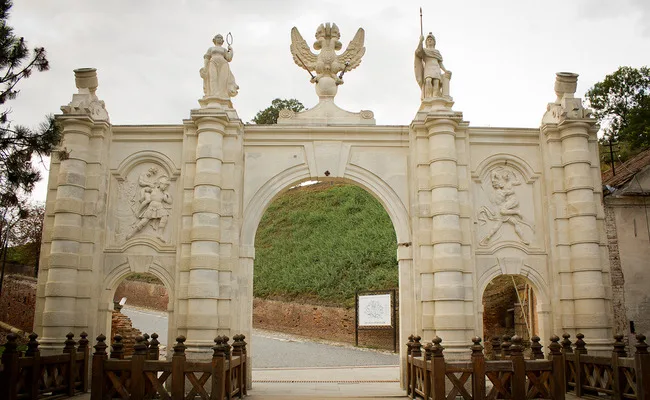
The Alba Carolina Citadel in Alba Iulia was built for defense only. It went up between 1715 and 1738, to plans by the Italian architect Giovanni Morando Visconti. The Habsburgs wanted it to be the strongest fortification in a defense system against the Ottomans.
It has the shape of an irregular heptagon, meaning a seven-sided plan, with bastions and six gates. Bastions are parts of the wall that stick out. From them, defenders could see and protect the surrounding ground better.
The gates are richly decorated, but their job was to control who came in. The citadel never had to fight the Ottomans it had been built against. For what else there is to see in the city, check the list of tourist attractions in Alba Iulia.
Best fortresses to visit in Romania
What makes a building a medieval castle?
A medieval castle brings together, in the same building, defense and the everyday life of a nobleman. Corvin Castle in Hunedoara shows this change well. It started as a stone fortress, which most researchers date to the 14th century.
After 1440, John Hunyadi turned the fortress into a castle. He added round towers, something new in Transylvania at the time, and gate towers. The chapel and the palace wing with the Knights' Hall and the Diet Hall appeared in the same period.
Before 1446, the plans changed, and the living quarters were given more space.
- The gate towers controlled the entrance.
- The Knights' Hall and the Diet Hall were rooms for receiving guests and holding meetings.
- The chapel was the castle's place of prayer.
Most beautiful castles in Romania
Mogoșoaia Palace, a residence with no defensive role
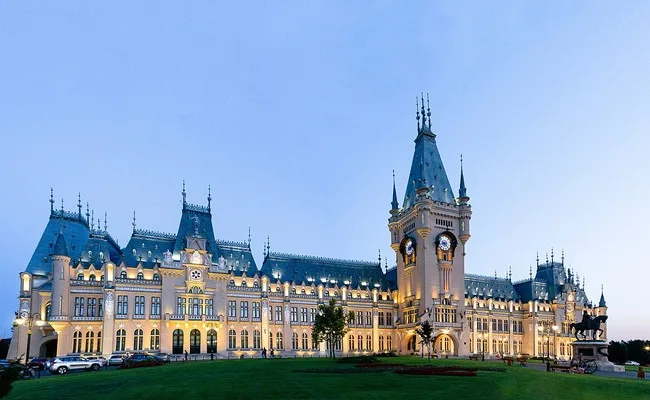
Mogoșoaia Palace was built for living in and receiving guests, not for fighting. Constantin Brâncoveanu, ruler of Wallachia, built it in 1702 for his son Ștefan. He placed it on the shore of a pond he had bought together with the village.
The palace blends the old forms of Wallachian architecture with Oriental, Baroque and Renaissance elements. The gardens stretch towards the lake. The estate also has a separate kitchen building, called a cuhnie, and an ice house.
A wall with a gate tower does not turn the palace into a fortress. It encloses the courtyard, but the main building was a home.
Best palaces to visit in Romania
Why is Peleș called a castle?
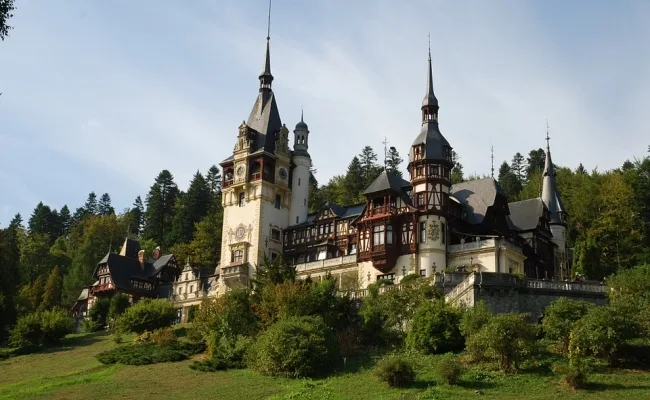
Peleș is called a castle by tradition, although it was the summer residence of King Carol I, not a fortification. The foundation stone was laid in 1875. The great project ended in 1914, when the king died.
The castle was a royal residence between 1883 and 1947. Political and cultural meetings also took place here, not just the royal family's summers.
As with Peleș, a building's name can stay on from tradition. You learn its purpose from its history, not from its name.
What to look for on site
Look at what dominates the building: the defensive features or the living spaces.
- Defense: bastions, ditches, thick walls, gate towers.
- Noble home: large halls, a chapel, rooms in towers, galleries.
- Residence: gardens, loggias, grand entrance stairs, views over a lake or park.
The sign at the entrance or the monument's website usually says when and for whom the building was built.
Questions about the confusing cases
Does a palace inside a fortress become a fortress too?
No. The palace remains the building people lived in, and the fortress is the whole complex protected by walls. The Princely Palace in Alba Iulia, for example, stands inside the citadel.
If a castle becomes a museum, does its category change?
No. Today's use does not change the way the building was built. Corvin Castle and Peleș are museums today, but they remain a medieval castle and a royal residence.
Can you tell a ruin was a fortress just from its thick walls?
No. Castles had thick walls too. Look at the history of the place: if it protected a town or a road, it was a fortress; if it was a nobleman's home, it was a castle.
If you are heading to Transylvania, the attractions in Hunedoara and those in Alba Iulia can be seen on the same trip. For the rest of the country, see the tourist attractions in Romania.
Sources
- Alba Iulia City Hall, Alba Carolina Citadel (the years, the architect, the shape, the gates and its role)
- Alba Iulia tourism portal, in Romanian (the gate route and the bastions)
- Corvin Castle Museum, in Romanian (the building stages, the towers, the chapel and the halls)
- National Heritage Institute, in Romanian (the year, the founder and the Mogoșoaia estate)
- Peleș National Museum (the building years and its role as a summer residence)
- Alba Iulia City Hall, The Princely Palace (the palace inside the citadel)
- Yale Center for British Art, “The British Castle” (the castle as a fortified home)